
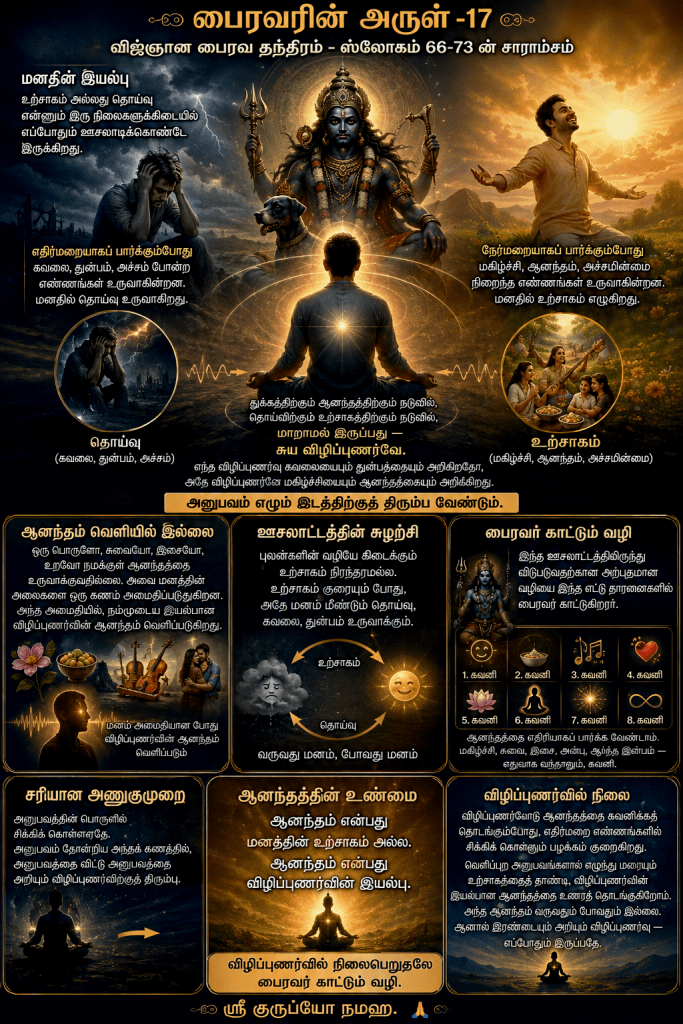
பைரவரின் அருள்-17-விஜ்ஞான பைரவ தந்திரம்- ஸ்லோகம் 66–73 ன் சாராம்சம்.
மனதின் இயல்பு பொதுவாக உற்சாகம் அல்லது தொய்வு என்னும் இரு நிலைகளுக்கிடையில் எப்போதும் ஊசலாடிக்கொண்டே இருக்கிறது.
நமக்கு உருவாகும் சூழ்நிலைகளை எதிர்மறையாகப் பார்க்கும்போது, அவை கவலை, துன்பம், அச்சம் போன்ற எண்ணங்களாக வெளிப்படுகின்றன. அதன் பின்னணியில் மனதில் ஒரு வகையான தொய்வு உருவாகிறது.
அதே சூழ்நிலைகளை நேர்மறையாகப் பார்க்கும்போது, அவை மகிழ்ச்சி, ஆனந்தம், அச்சமின்மை நிறைந்த எண்ணங்களாக வெளிப்படுகின்றன. அதன் பின்னணியில் மனதில் ஒரு வகையான உற்சாகம் எழுகிறது.
இவ்வாறு தொய்வும் உற்சாகமும் மாறி மாறி தோன்றிக்கொண்டே இருக்கின்றன.
ஆனால்…
துக்கத்திற்கும் ஆனந்தத்திற்கும் நடுவில்,
தொய்விற்கும் உற்சாகத்திற்கும் நடுவில்,
மாறாமல் இருப்பது — சுய விழிப்புணர்வே.
எந்த விழிப்புணர்வு கவலையையும் துன்பத்தையும் அறிகிறதோ, அதே விழிப்புணர்வே மகிழ்ச்சியையும் ஆனந்தத்தையும் அறிகிறது.
எனவே, துக்கத்திலோ ஆனந்தத்திலோ சிக்கிக் கொள்ளாமல், அனுபவம் எழும் இடத்திற்குத் திரும்ப வேண்டும்.
ஆனந்தம் வெளியில் இருந்து வருவது போல் தோன்றுகிறது.
ஆனால் உண்மையில், ஒரு பொருளோ, சுவையோ, இசையோ, உறவோ நமக்குள் ஆனந்தத்தை உருவாக்குவதில்லை. அவை மனத்தின் அலைகளை ஒரு கணம் அமைதிப்படுத்துகின்றன. அந்த அமைதியில், நம்முடைய இயல்பான விழிப்புணர்வின் ஆனந்தம் வெளிப்படுகிறது.
அறியாமையால், அந்த ஆனந்தம் புலன்களின் வழியே கிடைக்கும் உற்சாகமாகவே நாம் புரிந்துகொள்கிறோம்.
ஆனால் புலன்களின் வழியே உணரப்படும் உற்சாகம் நிரந்தரமாகத் தொடர முடியாது.
உற்சாகம் குறையும் போது, அதே மனம் மீண்டும் தொய்வையும் கவலையையும் துன்பத்தையும் அதே புலன்களில் வழியே உருவாக்கத் தொடங்குகிறது.
இந்த ஊசலாட்டத்திலிருந்து விடுபடுவதற்கான அற்புதமான வழியை இந்த எட்டு தாரணைகளில் பைரவர் காட்டுகிறார்.
ஆனந்தத்தை எதிரியாகப் பார்க்க வேண்டாம்.
மகிழ்ச்சி வந்தால் — கவனி.
சுவை வந்தால் — கவனி.
இசை வந்தால் — கவனி.
அன்பு வந்தால் — கவனி.
ஆழ்ந்த இன்பம் வந்தால் — கவனி.
ஆனால்…
அனுபவத்தின் பொருளில் சிக்கிக் கொள்ளாதே.
அனுபவம் தோன்றிய அந்தக் கணத்தில், அனுபவத்தை விட்டு அனுபவத்தை அறியும் விழிப்புணர்விற்குத் திரும்பு.
அப்போது ஒரு முக்கியமான உண்மை வெளிப்படுகிறது:
ஆனந்தம் என்பது மனத்தின் உற்சாகம் அல்ல.
ஆனந்தம் என்பது விழிப்புணர்வின் இயல்பு.
இவ்வாறு விழிப்புணர்வோடு ஆனந்தத்தை கவனிக்கத் தொடங்கும்போது, மனத்தின் தொய்வுக்கு காரணமான கவலை, துன்பம் போன்ற எதிர்மறை எண்ணங்களில் சிக்கிக் கொள்ளும் பழக்கம் படிப்படியாகக் குறைகிறது.
ஏனெனில், வெளிப்புற அனுபவங்களால் எழுந்து மறையும் உற்சாகத்தைத் தாண்டி, விழிப்புணர்வின் இயல்பான ஆனந்தத்தை உணரத் தொடங்குகிறோம்.
அந்த ஆனந்தம் வருவதும் போவதும் இல்லை.
வருவது மனம்.
போவது மனம்.
ஆனால் இரண்டையும் அறியும் விழிப்புணர்வு — எப்போதும் இருப்பதே.
அந்த விழிப்புணர்வில் நிலைபெறுதலே பைரவர் காட்டும் வழி.
ஸ்ரீ குருப்யோ நமஹ. 🙏
The Grace of Bairavar 17-Vijnana Bhairava Tantra Essence of Verses 66-73.
A deep spiritual philosophy of the changing mind and the pure consciousness state.
1. The Two Conditions of the Mind:
The human mind swings constantly and naturally between two poles: The State of Sluggishness (Depression/Downturn): When things are perceived negatively, thoughts of worry, suffering, and fear arise.
The State of Enthusiasm (Elation):
When we see the same situations as good, feelings of joy, bliss, and fearlessness arise.
2. The Center and Awareness:
Between sorrow and bliss,
Between sluggishness and enthusiasm,
That which remains unchanging is self-awareness.
The very same awareness that knows worry and suffering also recognizes happiness and bliss. Therefore, rather than getting trapped in the highs of experiences or the depths of sorrow, wisdom lies in returning to the center of that awareness.
3. The True Nature of Bliss:
External objects, tastes, music, or relationships do not directly grant us bliss.
Instead, they quiet the waves of the mind for a single moment. In that stillness, the bliss of our inherent awareness shines forth.
Due to ignorance, we mistake this eternal bliss for temporary excitement derived through the sense organs.
Sensory excitement is temporary, and when it wears off, the mind starts to generate sluggishness and worry again through those same senses.
4. The Way Shown by Bhairava:
Bhairava teaches us how to free ourselves from this endless swing through eight dharanas (meditations) of awareness: “Watch happiness when it arises.”
When flavor is—observe it.
When music arises—observe it.
When love arises—observe it.
When deep joy arises—observe it.
Key Principle: Do not get trapped in the object of the experience or bound by it. In the moment the experience arises, release it and return to the awareness that perceives it.
5. The Ultimate Realization:
Bliss is not the excitement of the mind; it is the very nature of awareness.
When one begins to observe bliss with awareness, the habit of getting caught in negative thoughts and mental sluggishness gradually fades away.
That which comes and goes is merely the mind. But the awareness that witnesses both is eternal and ever-present.
Abiding in that awareness is the path shown by Bhairava.
Sri Gurubhyo Namaha. 🙏


One response to “பைரவரின் அருள்-17-விஜ்ஞான பைரவ தந்திரம்- ஸ்லோகம் 66–73 ன் சாராம்சம்.”
சூஃபிகளின் கூற்றுப்படி:உற்சாகம் (Bast) வரும்போது, அது இறைவனின் ‘கருணையை’ (Jamal) நினைவூட்டுகிறது.
தொய்வு (Qabd) வரும்போது, அது மனதின் அகந்தையை (Nafs) அழித்து, மனிதனின் ‘எளிமையையும் இறை நம்பிக்கையையும்’ (Jalal) சோதிக்கிறது.
.சாராம்சம்:விஜ்ஞான பைரவ தந்திரம் “இடைவெளிகளை உற்றுநோக்கி சாட்சியாக இரு” எனக் கூறுவது போல, சூஃபித்துவம் “எல்லா உணர்ச்சிகளையும் இறைவனின் பரிசாக ஏற்றுக்கொள், ஆனால் எந்த உணர்ச்சியிலும் சிக்கிக் கொள்ளாதே” என்கிறது. ஊசலாடும் மனதை அமைதிப்படுத்த இரு மரபுகளும் காட்டும் பாதை விழிப்புணர்வும் அர்ப்பணிப்புமே (Surrender).
LikeLiked by 2 people