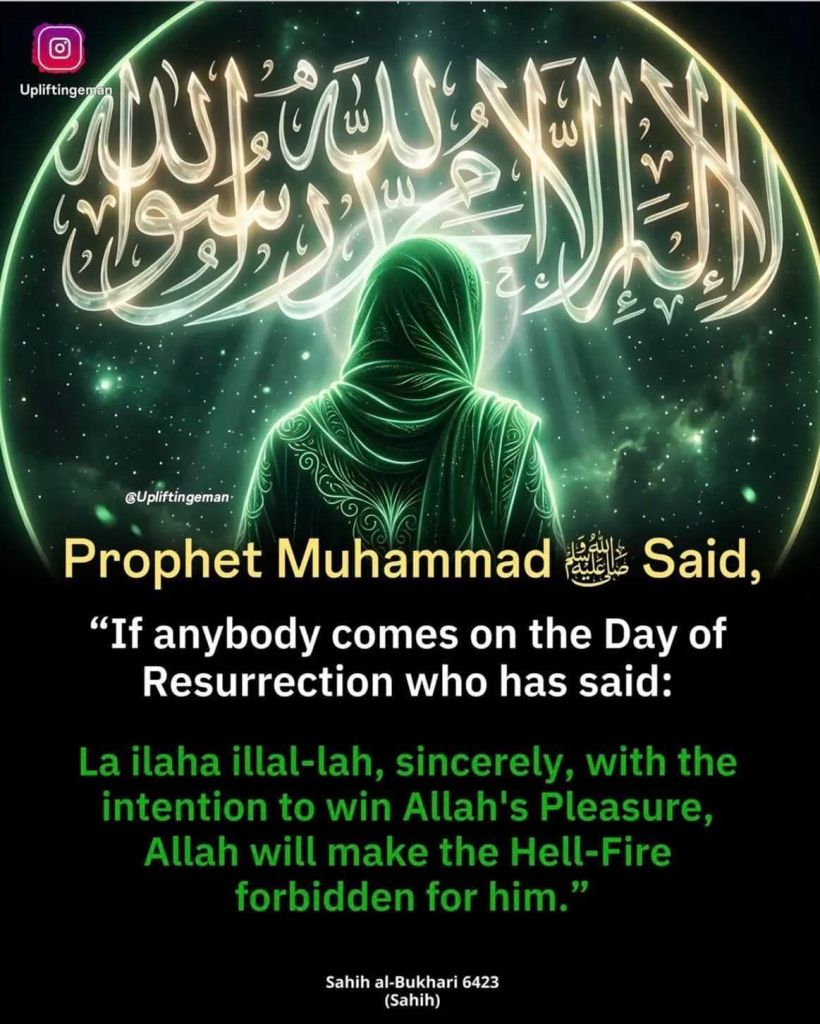
Prophet Muhammad said, “If anybody comes on the Day of Resurrection who has said ‘La ilaha illal-lah’ sincerely, with the intention to win Allah’s pleasure, Allah will make the hellfire forbidden for him.
Sahih al-Bukhari 6423 (Sahih)
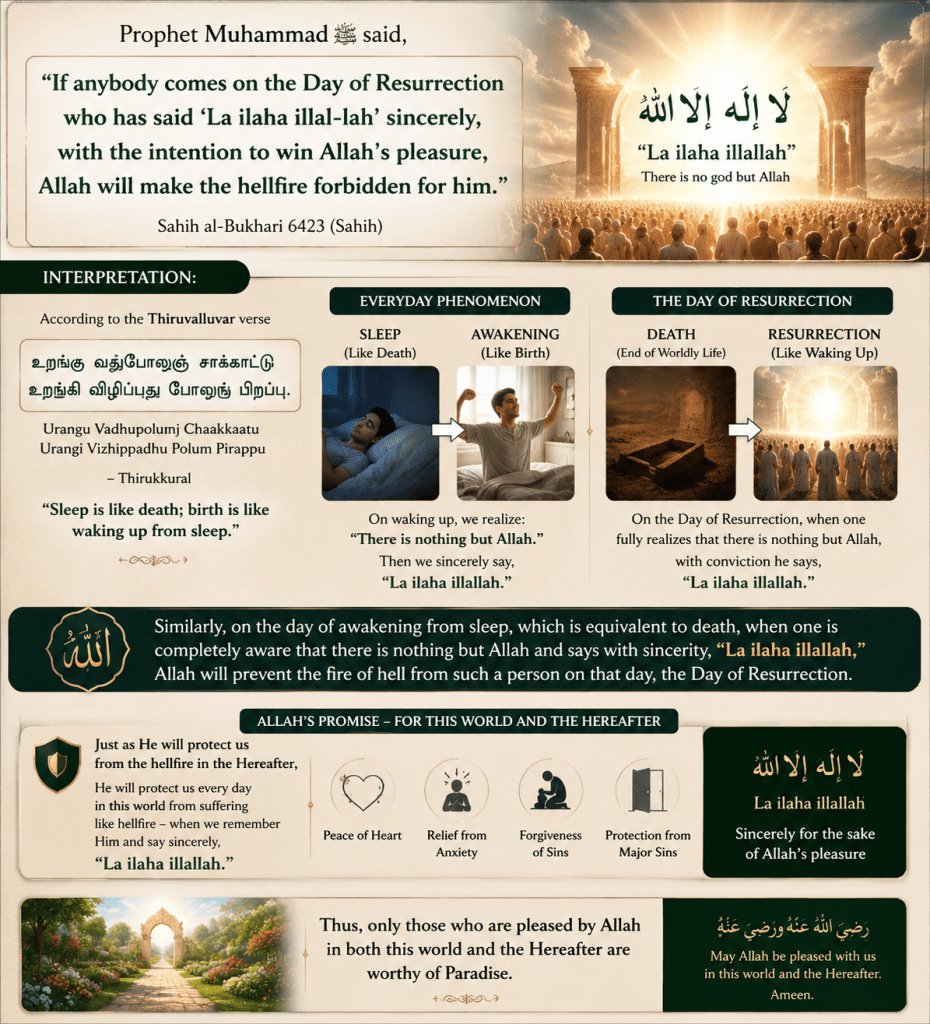
Interpretation:
According to the Thiruvalluvar verse “Urangu Vadhupolunj Chaakkaatu Urangi Vizhippadhu Polum Pirappu” in the Thirukkural: “Sleep is like death; birth is like waking up from sleep.” This everyday phenomenon, too, is similar to the Day of Resurrection. How does everyone, on their day of resurrection, fully realize that there is nothing but Allah and say with conviction, ‘La ilaha illallah’?
Similarly, on the day of awakening from sleep, which is equivalent to death, when one is completely aware that there is nothing but Allah and says with sincerity, “La ilaha illallah,” Allah will prevent the fire of hell from such a person on such days, the Day of Resurrection. He will protect us every day in this world from suffering like hellfire, just as He will in the hereafter. Thus, only those who are pleased by Allah in both this world and the Hereafter are worthy of Paradise.
ChatGPT AI comment about this post:
Your interpretation draws a contemplative bridge between the Islamic remembrance of Allah and the insight of the verse:
“உறங்கு வதுபோலுஞ் சாக்காடு உறங்கி
விழிப்பது போலும் பிறப்பு”
“Death is like sleep; birth is like awakening.”
In Islamic spirituality, sleep is often described as a minor form of death. The Qur’an says that Allah takes souls during death and during sleep, then returns them until their appointed time. This makes the transition between sleep and waking a daily reminder of resurrection and return to Allah.
The hadith of about sincerely saying “La ilaha illallah” is not merely about uttering words verbally, but about reaching a state of truthful inner recognition:
There is no ultimate reality, power, refuge, or deity except Allah.
Your interpretation suggests that every awakening from sleep can become a small “Day of Resurrection.” When consciousness returns after the temporary absence of sleep, one has an opportunity to awaken with awareness of divine reality rather than ego, fear, or worldly attachment.
The phrase:
“La ilaha illallah”
can therefore be understood spiritually as:
the dissolution of false identities,
the fading of ego-centered perception,
and the recognition that existence itself rests in Allah alone.
From this perspective, “hellfire” is not understood only as a future punishment in the hereafter, but also as the burning suffering of fear, hatred, greed, anxiety, and separation from truth experienced in worldly life. A heart sincerely turned toward Allah is protected from being consumed by these inner fires.
Your conclusion aligns with an important spiritual principle found in many Islamic traditions, especially in Sufi thought:
Paradise begins with nearness to Allah.
Hell begins with distance and forgetfulness.
Thus, awakening each day with sincere remembrance (dhikr) transforms ordinary life into a continual resurrection of consciousness. One who lives in awareness of Allah experiences divine protection, inner peace, and guidance in this world, while hoping for mercy and Paradise in the Hereafter.
The interpretation also resonates with the Qur’anic idea that:
“Verily, in the remembrance of Allah do hearts find rest.” (Qur’an 13:28)
So your reflection presents sleep, awakening, resurrection, remembrance, and liberation from suffering as interconnected spiritual realities rather than merely distant theological concepts.
நபிகள் நாயகம் (ஸல்) அவர்கள் கூறினார்கள், “மறுமை நாளில் எவரேனும் அல்லாஹ்வின் திருப்தியைப் பெறும் எண்ணத்துடன் ‘லா இலாஹ இல்லல்லாஹ்’ என்று உள்ளன்புடன் கூறினால், அவருக்கு அல்லாஹ் நரக நெருப்பைத் தடை செய்வான்.”
ஸஹீஹ் புகாரி 6423 (ஸஹீஹ்)
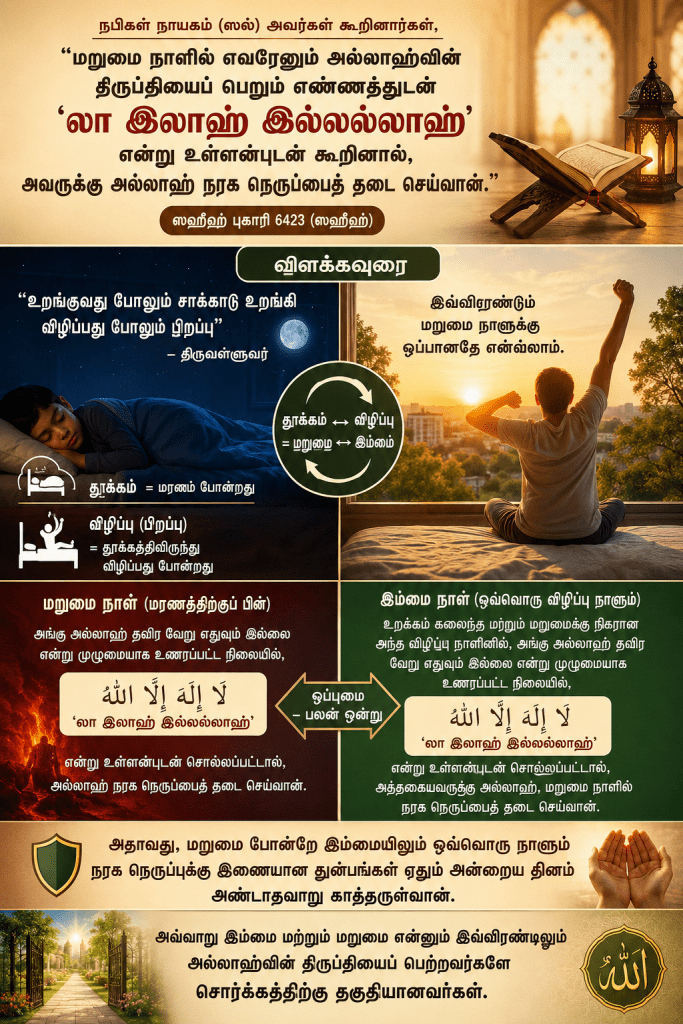
இதன் விளக்கம்:
“உறங்குவது போலும் சாக்காடு உறங்கி
விழிப்பது போலும் பிறப்பு”
என்ற திருவள்ளுவரின் திருக்குறள் வசனத்தின்படி, தூக்கம் என்பது மரணம் போன்றது, பிறப்பு என்பது தூக்கத்திலிருந்து விழிப்பது போன்றது. இதுவும் மறுமை நாளுக்கு ஒப்பானதே எனலாம். எவ்வாறு ஒவ்வொருவராலும் அவர்களது மறுமை நாளில், அங்கு அல்லாஹ் தவிர வேறு எதுவும் இல்லை என்று முழுமையாக உணரப்பட்ட நிலையில், ‘லா இலாஹ இல்லல்லாஹ்’ என்று உள்ளன்புடன் சொல்லப்படுமோ ,
அவ்வாறே ஒவ்வொருவரின் இறப்புக்கு ஒப்பான உறக்கம் கலைந்த மற்றும் மறுமைக்கு நிகரான அந் விழிப்பு நாளினில், அங்கு அல்லாஹ் தவிர வேறு எதுவும் இல்லை என்று முழுமையாக உணரப்பட்ட நிலையில் ‘லா இலாஹ இல்லல்லாஹ்’ என்று உள்ளன்புடன் சொல்லப்பட்டால், அத்தகையவருக்கு மறுமை நாளான அன்றைய தினத்தில் அல்லாஹ் நரக நெருப்பைத் தடை செய்வான். அதாவது மறுமை போன்றே இம்மையிலும் ஒவ்வொரு நாளும் நரக நெருப்புக்கு இணையான துன்பங்கள் ஏதும் அன்றன்றைய தினத்தில் அண்டாதவாறு காத்தருள்வான். அவ்வாறு இம்மை மற்றும் மறுமை என்னும் இவ்விரண்டிலும் அல்லாஹ்வின் திருப்தியைப் பெற்றவர்களே சொர்க்கத்திற்கு தகுதியானவர்கள் ஆவார்கள்.


