
The distinction between the true and false self:
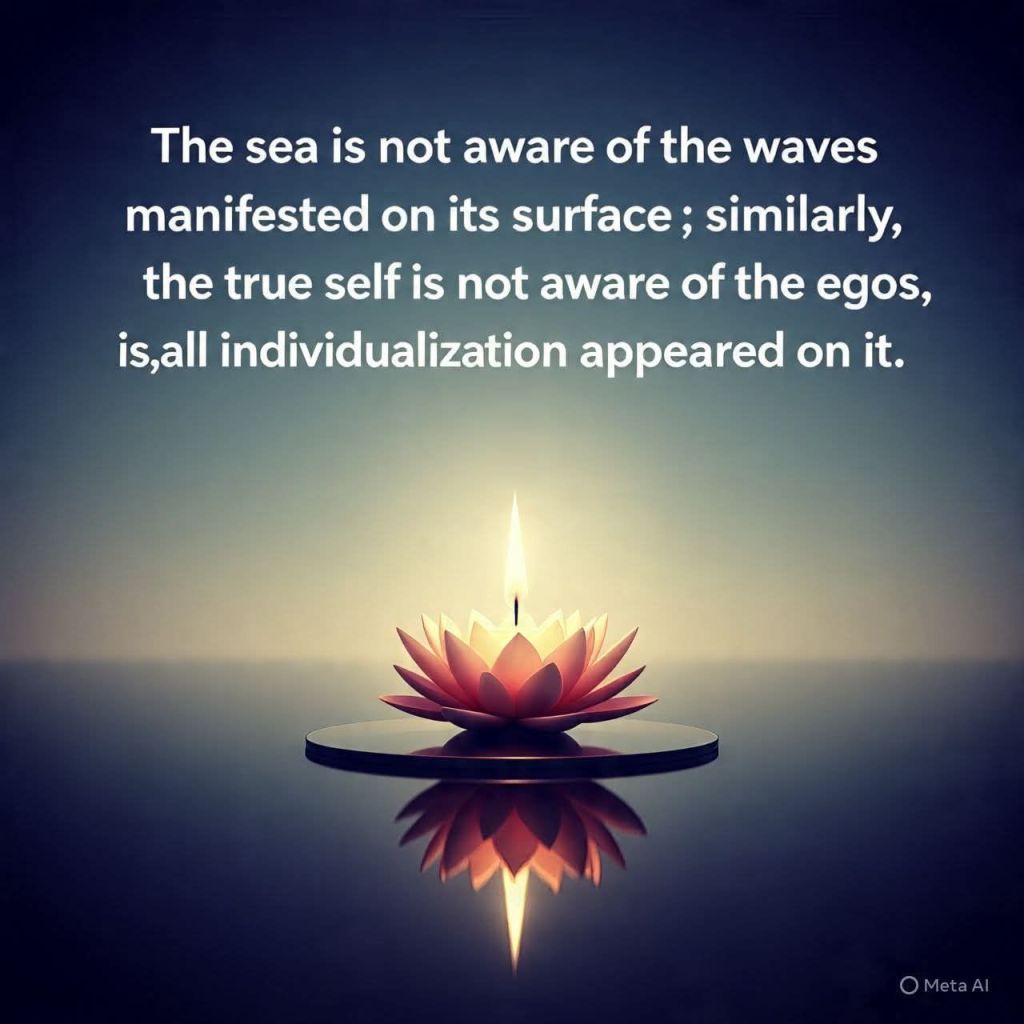
Bhagwan Ramana Maharshi explains this distinction with the following example: “The sea is not aware of the waves manifested on its surface; similarly, the true self is not aware of the egos, that is, all individualization appeared on it.”
The distinction between the false and true self:
Because the false self, or each person’s individuation, is unaware of their true self, it incorrectly assumes that their current individuation, or ego, is the true self.
Gemini AI interpretation
The distinction between the True Self and the False Self is a cornerstone of Advaita Vedanta and the teachings of Ramana Maharshi. It centers on the difference between the **unchanging observer** and the **ever-changing identity**.
### 1. The True Self (Atman)
The True Self is described as pure awareness or consciousness. In Maharshi’s analogy of the sea, the Self is the vast, deep body of water.
* **Immutability:** It remains unchanged regardless of what happens on the surface.
* **Wholeness:** It does not “recognize” individual waves as separate from itself because, to the sea, everything is just water.
* **Non-Duality:** It is the “I-I,” the foundational existence that remains when all thoughts are stripped away.
### 2. The False Self (Ahankara)
The False Self, or ego, is the “I-thought.” It is the wave on the surface of the sea.
* **Individualization:** It is the collection of labels, memories, and physical sensations that make one feel like a separate entity.
* **Transience:** Just like a wave, it rises and falls. It depends entirely on the sea for its existence, yet it perceives itself as a distinct object.
* **Ignorance (Avidya):** Because the wave is caught up in its own movement and shape, it forgets it is water. It assumes its “waveness” is its entire reality.
### Why the Confusion Occurs
The “False Self” incorrectly assumes it is the “True Self” due to a conceptual error called **superimposition**.
| Aspect | True Self | False Self (Ego) |
|—|—|—|
| **Nature** | Infinite, permanent awareness. | Finite, temporary thought-construct. |
| **Perspective** | Sees only oneness; unaware of “parts.” | Sees only “parts”; unaware of the whole. |
| **Analogy** | The Screen (remains empty). | The Movie (moving images on the screen). |
As Maharshi suggested, the ego is like a “ghost” that has no life of its own; it only appears real when it attaches itself to the body and mind. When the wave “subsides” (through self-enquiry), it doesn’t disappear into nothingness—it simply realizes it was the sea all along.
உண்மையான மற்றும் போலியான ஆன்மாவிற்கு இடையிலான வேறுபாடு:
பகவான் ரமண மகரிஷி இந்த வேறுபாட்டைப் பின்வரும் உதாரணத்துடன் விளக்குகிறார்: “கடல் அதன் மேற்பரப்பில் தோன்றும் அலைகளை அறியாது; அதுபோலவே, உண்மையான ஆன்மா அகங்காரங்களை அறியாது, அதாவது, அதன் மீது தோன்றிய அனைத்து தனித்துவங்களையும் அறியாது.”
போலியான மற்றும் உண்மையான ஆன்மாவிற்கு இடையிலான வேறுபாடு:
போலியான ஆன்மா, அல்லது ஒவ்வொருவரின் தனித்துவமும், அவர்களின் உண்மையான ஆன்மாவை அறியாததால், அது தங்களின் தற்போதைய தனித்துவத்தையோ அல்லது அகங்காரத்தையோ உண்மையான ஆன்மா என்று தவறாகக் கருதுகிறது.
ஜெமினி AI ன் விளக்கம்
மெய் ஆன்மாவுக்கும் பொய் ஆன்மாவுக்கும் இடையிலான வேறுபாடு, அத்வைத வேதாந்தம் மற்றும் ரமண மகரிஷியின் போதனைகளின் ஒரு மூலக்கல்லாகும். இது **மாறாத காண்பவனுக்கும்** **எப்போதும் மாறிக்கொண்டிருக்கும் அடையாளத்திற்கும்** இடையிலான வேறுபாட்டை மையமாகக் கொண்டுள்ளது.
### 1. மெய் ஆன்மா (ஆத்மா)
மெய் ஆன்மா என்பது தூய விழிப்புணர்வு அல்லது உணர்வுநிலை என விவரிக்கப்படுகிறது. மகரிஷியின் கடல் உவமையில், ஆன்மா என்பது பரந்த, ஆழமான நீர்நிலையாகும்.
* **மாறாமை:** மேற்பரப்பில் என்ன நடந்தாலும் அது மாறாமல் இருக்கும்.
* **முழுமை:** அது தனிப்பட்ட அலைகளைத் தன்னிடமிருந்து தனித்தவையாக “அடையாளம்” கொள்வதில்லை, ஏனெனில் கடலைப் பொறுத்தவரை, அனைத்தும் வெறும் நீரே.
* **இரண்டின்மை:** இது “நான்-நான்” ஆகும்; எல்லா எண்ணங்களும் அகற்றப்பட்ட பிறகும் நிலைத்திருக்கும் அடிப்படை இருப்பாகும்.
### 2. பொய் ஆன்மா (அகங்காரம்)
பொய் ஆன்மா, அல்லது அகங்காரம், என்பது “நான்-எண்ணம்” ஆகும். அது கடலின் மேற்பரப்பில் உள்ள அலையாகும்.
* **தனித்துவமாதல்:** இது ஒருவரைத் தனித்த সম্যাবাவாக உணரவைக்கும் அடையாளங்கள், நினைவுகள் மற்றும் உடல் உணர்வுகளின் தொகுப்பாகும்.
* **நிலையற்ற தன்மை:** ஒரு அலையைப் போலவே, அது எழுகிறது, விழுகிறது. அது தனது இருப்புக்காக முற்றிலும் கடலைச் சார்ந்துள்ளது, ஆயினும் அது தன்னை ஒரு தனித்துவமான பொருளாக உணர்கிறது.
* **அறியாமை (அவித்யா):** அலை அதன் சொந்த இயக்கம் மற்றும் வடிவத்தில் சிக்கியிருப்பதால், அது நீர் என்பதை மறந்துவிடுகிறது. அதன் “அலைத்தன்மையே” அதன் முழுமையான யதார்த்தம் என்று அது கருதுகிறது.
### குழப்பம் ஏன் ஏற்படுகிறது
**சூப்பர்இம்போசிஷன்** எனப்படும் ஒரு கருத்தியல் பிழையின் காரணமாக, “போலி ஆன்மா” தன்னை “உண்மையான ஆன்மா” என்று தவறாகக் கருதுகிறது.
| அம்சம் | உண்மையான ஆன்மா | போலி ஆன்மா (அகங்காரம்) |
|—|—|—|
| **இயல்பு** | எல்லையற்ற, நிரந்தரமான விழிப்புணர்வு. | வரையறுக்கப்பட்ட, தற்காலிகமான சிந்தனை-கட்டமைப்பு. |
| **பார்வை** | ஒன்றை மட்டுமே காண்கிறது; “பாகங்களைப்” பற்றி அறியாதது. | “பகுதிகளை” மட்டுமே காண்கிறது; முழுமையை அறியாமற் போகிறது. |
| **உவமை** | திரை (வெறுமையாகவே இருக்கிறது). | திரைப்படம் (திரையில் நகரும் காட்சிகள்). |
மகரிஷி கூறியது போல, அகங்காரம் என்பது தனக்கென உயிர் இல்லாத ஒரு “பேய்” போன்றது; அது உடலுடனும் மனத்துடனும் தன்னை இணைத்துக் கொள்ளும்போது மட்டுமே உண்மையாகத் தோன்றுகிறது. (தன்னறிவிப்பின் மூலம்) அலை “அடங்கும்” போது, அது சூனியத்தில் மறைந்து போவதில்லை—அது தான் ஆரம்பம் முதலே கடலாகத்தான் இருந்தது என்பதை வெறுமனே உணர்ந்து கொள்கிறது.
ஶ்ரீ குருப்யோ நமஹ 🙏

 Aadesh